
Context of the project
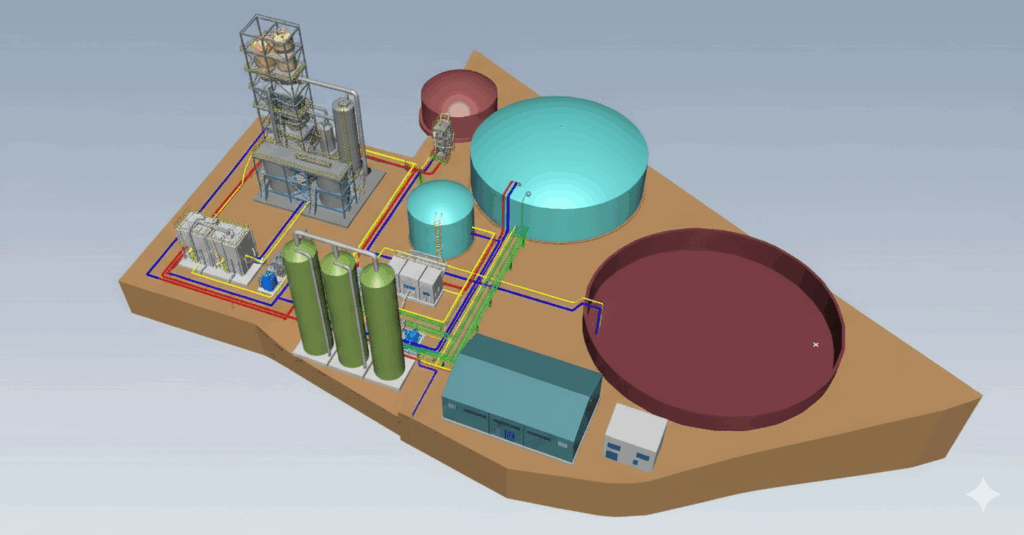
One of Spain’s leading manufacturers of recycled paper requested the collaboration of PRODEN Group to carry out a safety and risk assessment study in the design phase of a new wastewater treatment plant, located in its industrial complex in Lleida. The project was part of the expansion of its water treatment infrastructure, with the aim of improving the efficiency of the process and ensuring compliance with applicable environmental and safety regulations.
From a preventive engineering perspective, PRODEN Group was responsible for the design of a new wastewater treatment plant. preventive engineeringPRODEN integrated industrial safety in the design phase, anticipating the risks of the process and avoiding later modifications on site.
Focus of the work
PRODEN‘s multidisciplinary team, made up of engineers specializing in process safety, automation, regulations, industrial chemistry and occupational hazards, developed a comprehensive analysis of the facility using preventive engineering principles.
This approach made it possible to identify and evaluate in advance the risks inherent in the purification process and the interactions between the various systems and equipment.
The study was carried out directly on the manufacturer’s 3D design, which made it possible to identify and evaluate in advance the risks inherent in the purification process and the interactions between the various systems and equipment.
During the development of the project, PRODEN worked in coordination with the client’s maintenance, safety and engineering departments, ensuring that the proposed solutions were integrated into the actual operation and maintenance of the plant.
Normative and technical evaluation
The study considered a broad set of risks specific to the industrial environment of a wastewater treatment plant, including:
- Confined spaces and potentially explosive atmospheres (ATEX).
- Exposure to chemicals used in water treatment.
- Biological risks derived from purification processes.
- Ionizing and non-ionizing radiation generated by certain control and disinfection equipment.
Likewise, compliance with the essential safety requirements established in:
- Machinery Directive 2006/42/EC,
- New Regulation (EU) 2023/1230 on machinery,
- Royal Decree 1215/97 on the use of work equipment,
- and the corresponding harmonized standards.
The analysis also included the determination of the SIL (Safety Integrity Level) parameter in accordance with the UNE-EN 61511-3 standard, applicable to process safety instrumented systems.
Results of the work
The safety study, based on a preventive engineering methodology preventive engineeringengineering methodology, made it possible:
- Detect and classify the risks of the purification process prior to construction.
- Define the technical and organizational measures necessary to ensure the safety of operators and the integrity of the installation.
- Optimize the design of control and protection systems, reducing implementation costs.
- Ensure regulatory compliance and document traceability from the design phase.
The result was a wastewater treatment plant designed under criteria of functional safety and regulatory compliance, prepared for reliable and safe long-term operation.
Conclusion
The project demonstrated the importance of integrating industrial safety in the early design phases of complex infrastructures.
This action, based on the principles of preventive preventive engineeringreaffirms PRODEN’s commitment to the development of safe, efficient and sustainable solutions.
The collaboration between PRODEN’s multidisciplinary team and the client’s technical departments made it possible to develop a safe, efficient solution that was fully adapted to the plant’s actual operating conditions.